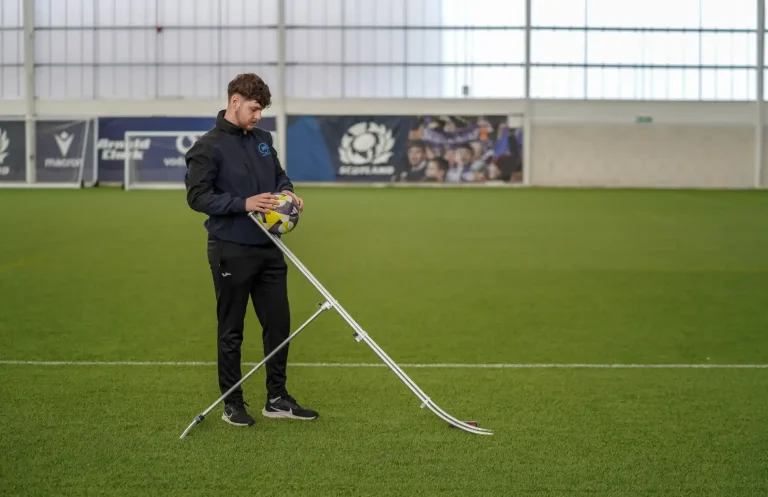
Field & Site testing for sports surfaces
FA Pitch Testing
FIFA, World Rugby, FIH, testing
Pitch Condition Surveys
Athletics and indoor surfaces
Proudly Accredited and Approved by





Field & Site TEsting Services
- Quality Programme for Floodlights
- Artificial Turf Testing & Certification
- Certifications by Sport
- Geotechnical Interpretations
- Goal Line Technology
- UKA Trackmark
- Playground Surface Testing
- Site Investigations
- GMAX Testing (shock attentuation)
- Slip Resistance Testing
- Compliance Testing
- Product & Component Evaluation
- Indoor Floor Testing
- Goal Post Testing
Key Stage Inspections
- Compaction
- Drainage
- Evenness
- Material Identification
Sports Testing & Certifications
Why Certification Saves You Money
Field testing is a safeguard for your facility’s performance, reputation, and financial return. Independent testing gives owners, users, and stakeholders confidence that their surface is safe, fit for purpose, and built to last.
Extend surface lifespan through verified performance and maintenance planning
Maintain eligibility for competition by meeting governing body requirements
Plan maintenance budgets accurately using measured performance data
Avoid costly rework by detecting installation defects and material issues early
Protect warranties by proving surfaces meet required performance standards
Reduce legal and insurance risk with independent compliance reports
Field Testing Case Studies
Subscribe To Be the first to Get the latest industry news & Updates
Sports Labs Accreditations, Quality Control Marks, Memberships & Trade Bodies









Frequently Asked QuestionS
Get clear answers to the most common questions
What is "Site Testing" (Field Testing) in sports facility management?
Site Testing is the on-site verification of a sports surface’s performance and safety after installation or during its lifecycle. Unlike laboratory testing of raw materials, Sports Labs Site Testing audits the “as-built” system which includes the sub-base, shock pad, and turf to ensure the finished facility complies with international standards like FIFA, World Rugby, or FIH.
Why is G-Max testing critical for athlete safety?
G-Max testing measures the shock-attenuation properties of a sports surface, specifically its ability to absorb the force of an impact. High G-Max values indicate a “hard” surface, which increases the risk of concussions and lower-limb injuries. Sports Labs uses ASTM F355 protocols to ensure surfaces remain within safe thresholds throughout their operational life.
What are Key Stage Inspections (KSI) in sports construction?
What is the difference between G-Max and HIC (Head Impact Criteria) testing?
Why do governing bodies require periodic re-testing of sports pitches?
How does slip resistance testing prevent sports injuries?
What is a Forensic Site Investigation?
A Forensic Site Investigation is a diagnostic audit performed when a sports surface fails prematurely or performs inconsistently. Sports Labs utilises material identification, geotechnical interpretation, and performance data to pinpoint the root cause, whether it be poor drainage, contaminated infill, or sub-base settlement. This provides a roadmap for remediation.
How does geotechnical interpretation prevent sports surface failure?
Before construction begins, geotechnical interpretation analyzses the soil’s load-bearing capacity and drainage characteristics. Sports Labs uses these civil engineering principles to ensure the sub-base design is appropriate for the local ground conditions, preventing the “sinking” or “heaving” that leads to unplayable surface irregularities.
What is "Material Identification" in site testing audits?
How does independent site testing support facility insurance and warranties?
What is the difference between lab testing and site testing?
Laboratory testing establishes the theoretical performance of a product, while Site Testing (Field Testing) audits the “as-built” facility. Site testing verifies that the installation performs correctly under real-world conditions. This includes the sub-base and drainage
What is G-Max testing?
What is HIC (Head Impact Criteria) testing?
HIC testing assesses the risk of traumatic head injury on a surface. It is used to determine the “Critical Fall Height,” ensuring that surfaces in playgrounds or high-impact sports areas are soft enough to prevent life-threatening injuries during a fall.
How often should a sports pitch be tested?
What are Key Stage Inspections (KSI)?
Key Stage Inspections are independent audits performed at critical points during construction (e.g., sub-base compaction). These inspections identify engineering errors before the final surface is laid, protecting the facility’s 10-15 year lifespan.
Contact Sports Labs
Speak to an expert consultant for Field & Site testing for sports surfaces