World Squash & The Evolution of Structured Certification
World Squash is entering a new phase in its technical governance. How does this affect the PSA Squash Tour and clubs? Read to find out.

In a stadium or grass roots facility the lighting performance has a direct impact on the quality of play, and thus the safety of the users. Having the lighting output independently verified is a key step any facility owner or procurement manager should include in the scope of works. There are also governing body approval schemes we should adopt more regularly, most notably launched by FIFA.
You can download this article to your device and read it later:
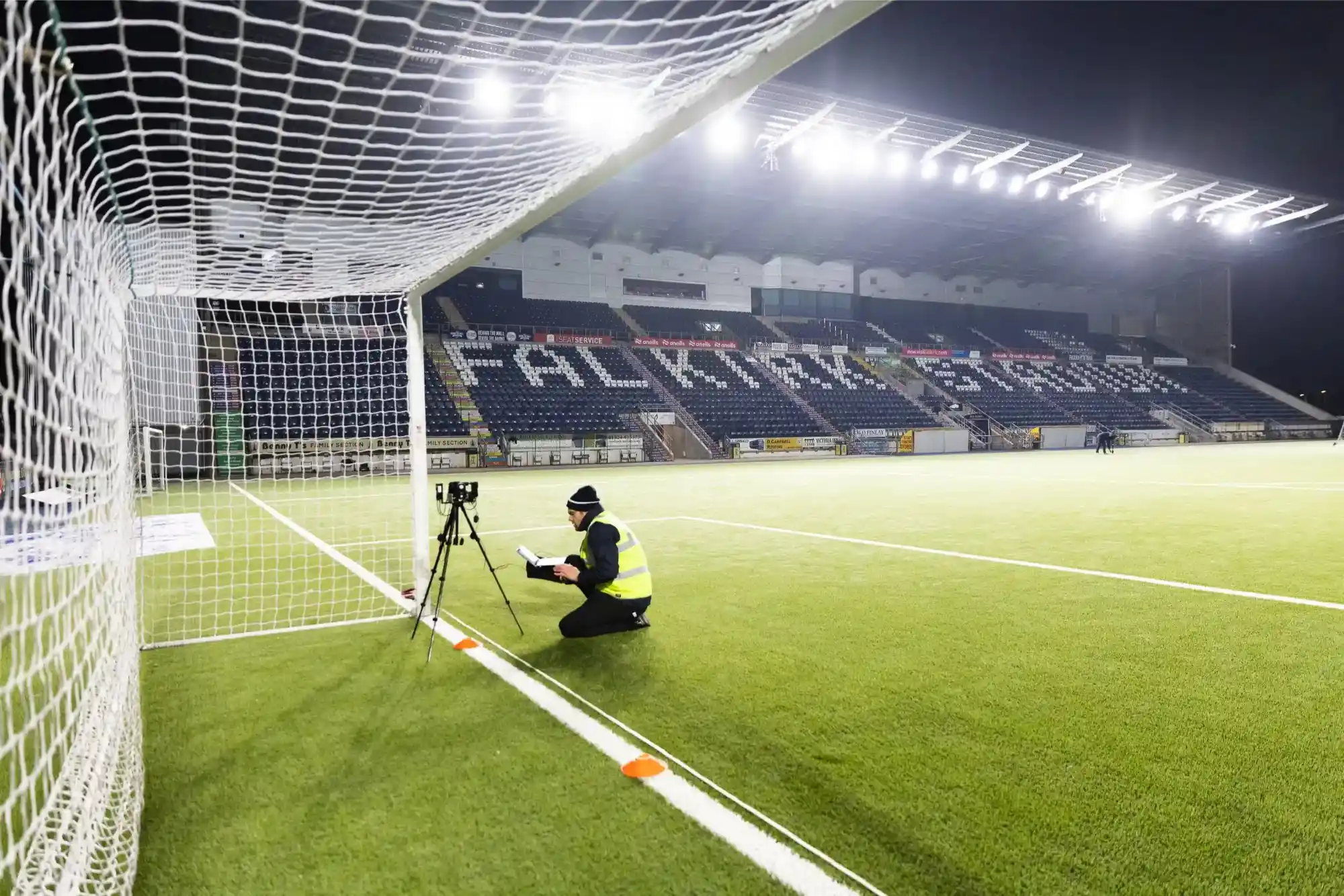
Floodlight systems ensure optimal pitch visibility during matches and training sessions. Comprising of metal halide or now more commonly LEDs strategically positioned around the pitch, these systems provide sufficient and uniform lighting for night play.
The players, the buyer, the neighbours, the broadcaster and the viewer at home all benefit from good, reliable lighting solutions. Common problems are short of the minimum lux tolerances and poor uniformity from location to the adjacent locations.
Checking the actual output of the lights on site versus the theoretical design is a key part of checking as a buyer you are getting what you have invested in. The spill and light pollution out with the main playing area can also have an impact on residential properties.
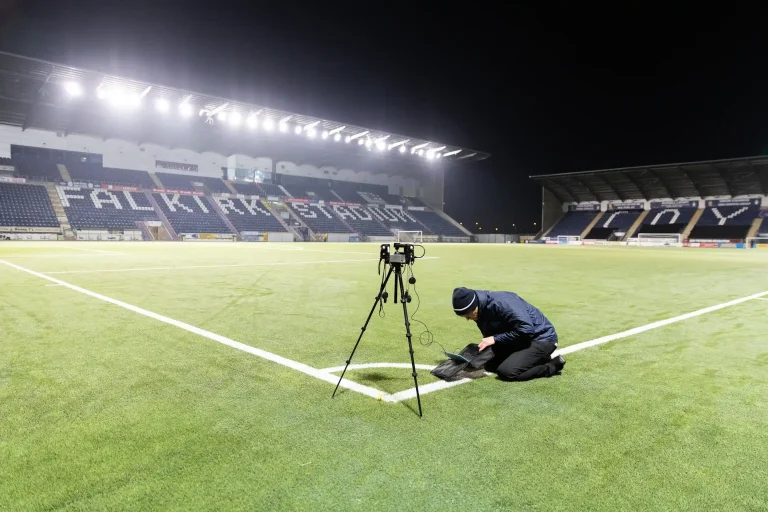
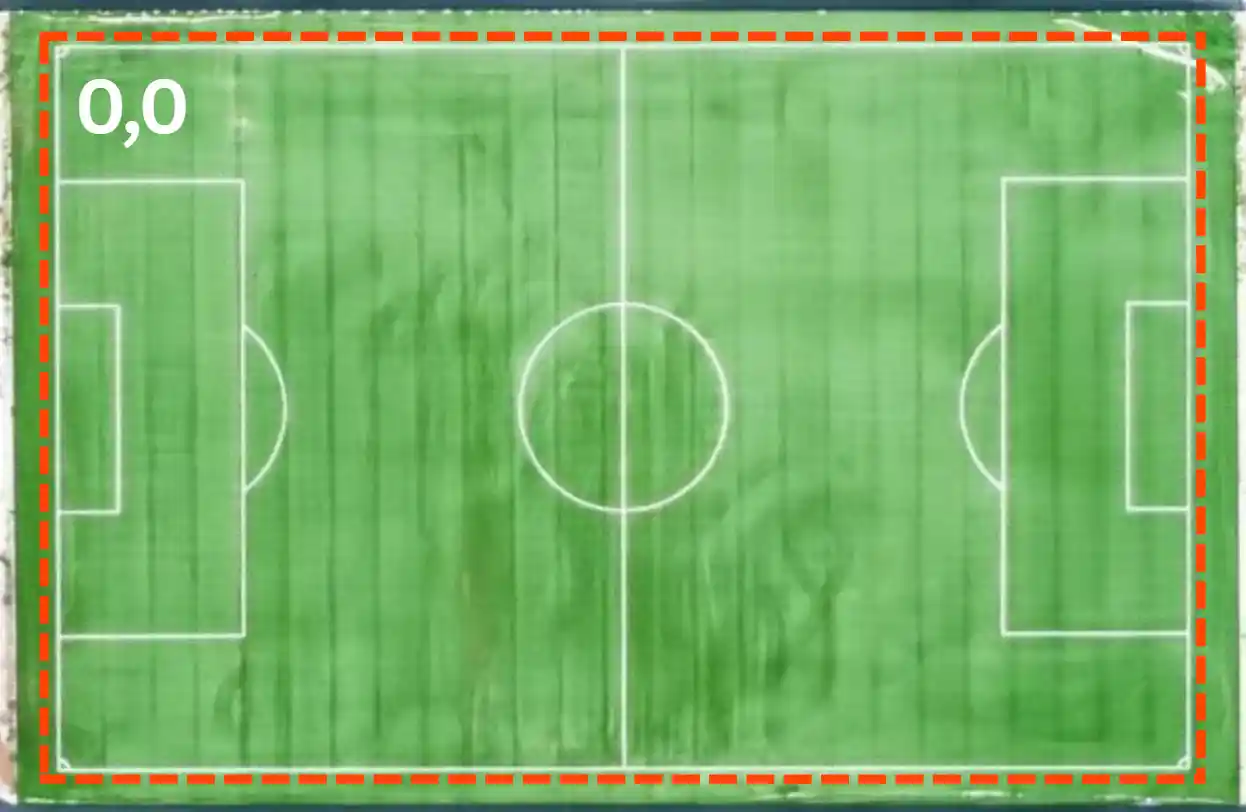
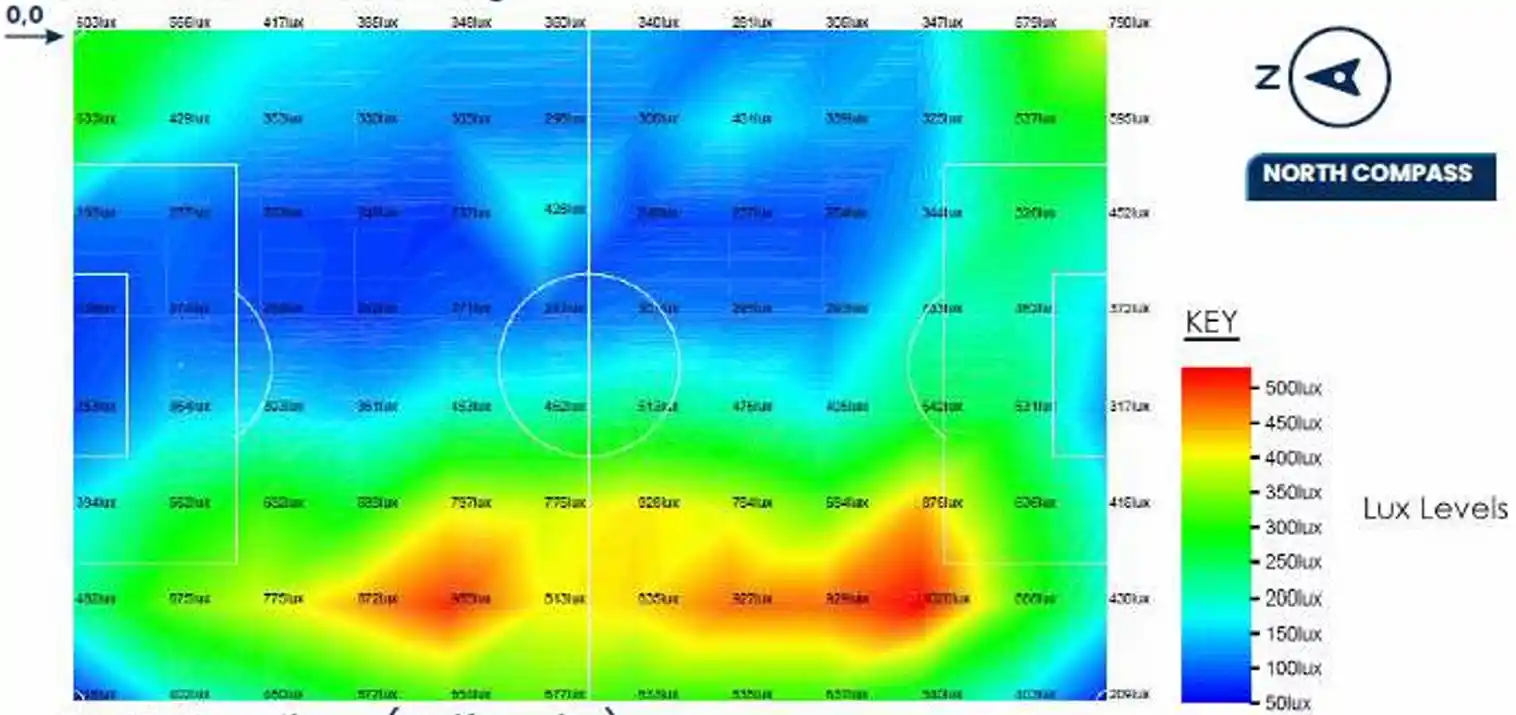
Our trained and accredited technician independently record the readings from the pitch. This means setting out a grid, recording readings at 96 points on the pitch with different devices, then analysing the results for compliance and uniformity.

The assessment takes approximately 3 hrs on site to conduct all vertical lux, horizontal lux, main camera directional testing and flicker factor tests on a 96 point grid, across a standard 105m by 68m field. This includes goal line positions.
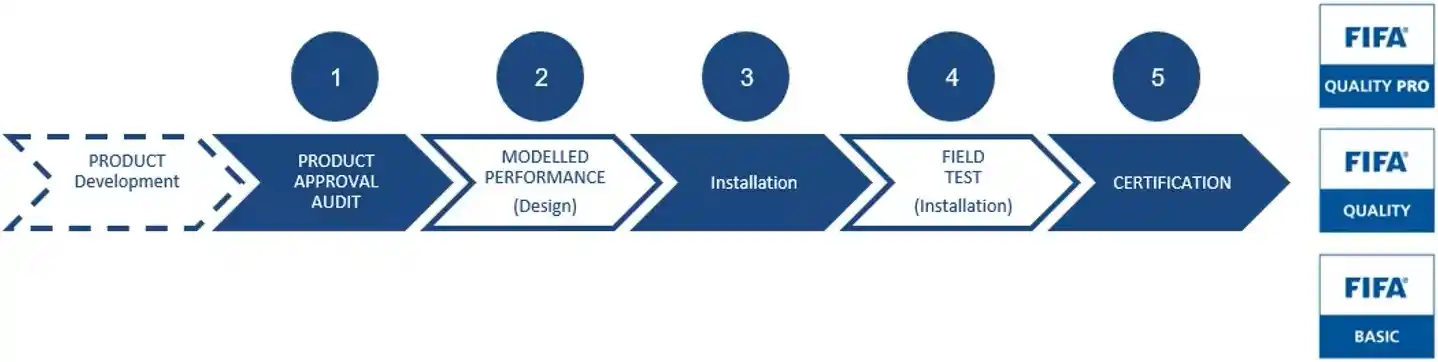
On completion of the testing, a report can be sent to the client and relevant governing body. The FIFA program, a 5 step process, allows licensees and preferred producers the opportunity to apply for a certificate which is conducted by a FIFA accredited test institute.
This part of the process is a desktop product audit (stage 1) prior to installation and carried out by the manufacturer before selling the product. It covers checks on General safety, Electromagnetic compatibility, Environmental requirements, Painting, Corrosion, Shock and Vibration, LED module/Luminaire performance and Warranty expectations.
FIFA Quality Pro: for football venues using football technologies.
FIFA Quality: for football venues and training sites
FIFA Basic: for football venues and training sites for non-commercial use
We use state-of-the-art testing equipment that is calibrated under ISO 17025 conditions, ensuring accuracy reliability in our assessments. and with equipment geographically located to make independent testing accessible, our equipment can take 5 orientations in one set with 5 Lux receptor heads set up on a custom-built tripod.
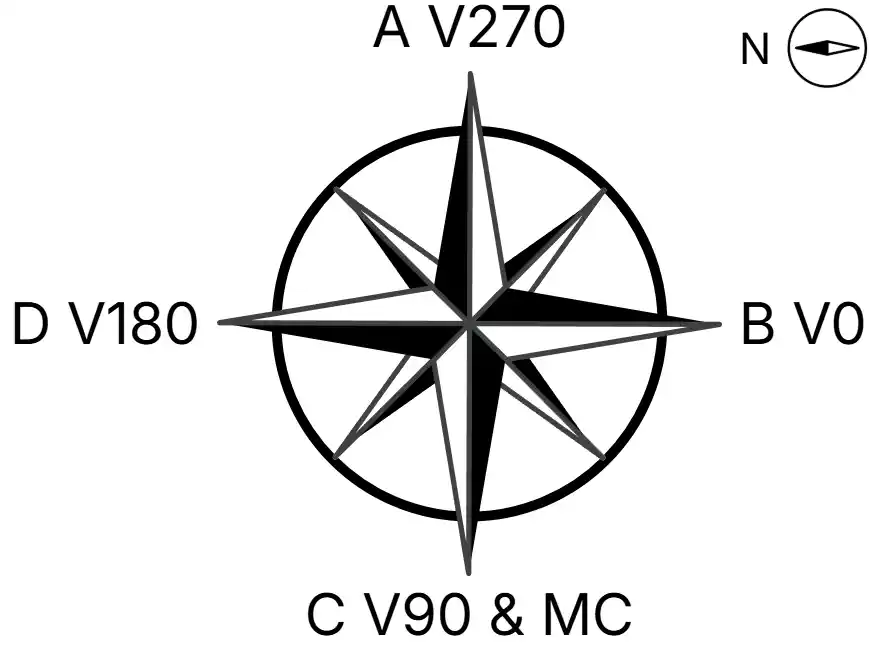
Vertical Lux – The illuminance on the vertical plane. The illuminance on the Ev 0°, 90°, 180° or 270° vertical plane along with the main camera direction.
Horizontal Lux – (Eh) The average illuminance on the horizontal plane.
Uniformity (MAUR) – The minimum adjacent uniformity ratio or maximum permissible difference between any two adjacent points.
Flicker Factor, Colour Rendering Index, Colour Temperature and Glare are other notable tests.
For the site test, the competition requirements define the tolerances. Within the FIFA manual, there is detail for FIFA Lighting Standard A, B, C and D as well as provisions for training pitches Grade 1 to Grade 6. As an example Eh (Horizontal lux) average expectations can range from 1000 to 2500 lux.
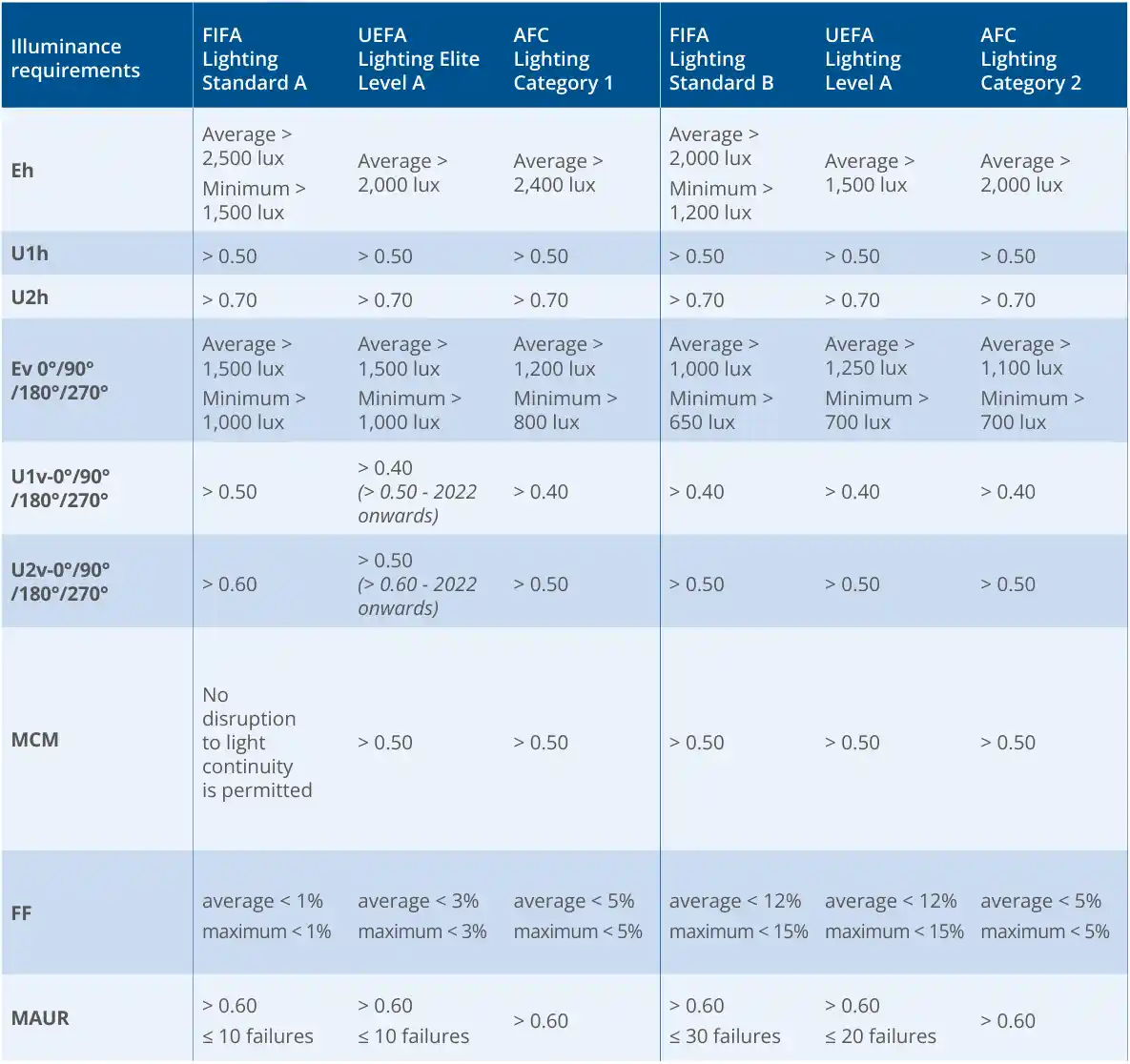
Article 11: Annexe – Overview of FIFA lighting standards for training pitches

Quality floodlight systems significantly impact game quality by
The UEFA Lighting Guide 2023 gives guidance on minimum requirements for competitions as stated in the UEFA Stadium Infrastructure Regulations.
This is for UEFA member associations and suppliers to provide appropriate illuminance at stadiums in the UEFA region.
The levels range from Elite Level A for example hosting the UEFA Euro’s final to level D being nonbroadcast matches.
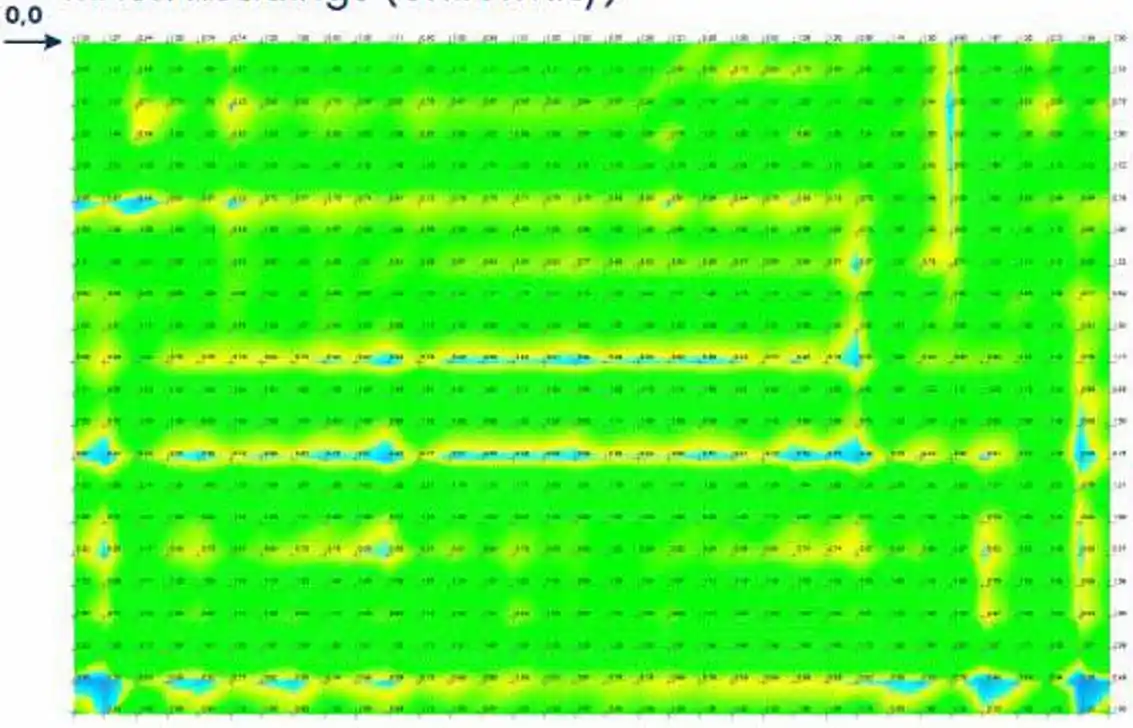
For safety and performance, consistency in lux at adjacent points is analysed. This uniformity is a pass/fail criteria, shown in more detail below with an example provide.
The initial stage is completed by the manufacturer, which is an audit by the laboratory against the product for FIFA Quality and Quality Pro.
Then the site test is carried out by a test institute, and if passing an approval certificate it released by FIFA.
The testing can be commissioned by various stakeholders and performed independently.
Councils, Clubs, Leagues, and Competition Organisers from the perspective of a buyer and user.
For Installation Contractors it allows sign off, completion and closure, releasing retention from a project
When supporting our clients we can combine additional services in the same visit. This helps out clients reduce facility downtime and put in less administration effort.
Talk to the global leaders in sports testing for floodlighting according to the FIFA Quality Programme.
Speak to Specialist
Meet the Experts
If you enjoyed this article, then pick another! Or subscribe to the Sports Labs Field Notes to be notified when new articles are released.
World Squash is entering a new phase in its technical governance. How does this affect the PSA Squash Tour and clubs? Read to find out.
We bring attention to the ability of a field owner, facility manager or maintenance operative to apply a basic pile ratio.
World Squash is entering a new phase in its technical governance. How does this affect the PSA Squash Tour and clubs? Read to find out.
In sports lighting, transparency refers to the independent, third-party verification of a system’s performance. It involves using open-standard grid measurements and calibrated equipment to provide a report that is free from manufacturer bias. This ensures the facility owner receives a true representation of lux levels, uniformity, and energy efficiency.
While lux measures the amount of light, uniformity (expressed as U1 and U2 ratios) measures how evenly that light is spread. High transparency in reporting identifies “hot spots” and “dark zones.” Poor uniformity can impair a player’s depth perception and ball tracking, making it a critical safety metric for governing bodies like FIFA and World Rugby.
To maintain compliance and safety, most national governing bodies (NGBs) recommend a professional re-test every two years. Independent testing verifies that the “Maintained Illuminance” has not dropped below the required threshold due to lamp degradation or lens fouling, ensuring the system remains fit for competitive play.
Opaque testing can lead to significant legal and operational risks, including planning permission breaches due to light spill, and liability claims if an injury occurs in a poorly lit area. Transparency provides a “legal audit trail,” proving that the facility has met the required EN 12193 standards for sports lighting.
Independent testing by Sports Labs verifies the actual power draw against the light output. This transparency allows facility managers to identify system inefficiencies, such as misaligned LED beam angles or failing drivers, ensuring the system operates at the lowest possible cost while maintaining peak performance.
In sports lighting, transparency refers to the independent, third-party verification of a system’s performance. It involves using open-standard grid measurements and calibrated equipment to provide a report that is free from manufacturer bias. This ensures the facility owner receives a true representation of lux levels, uniformity, and energy efficiency.
While lux measures the amount of light, uniformity (expressed as U1 and U2 ratios) measures how evenly that light is spread. High transparency in reporting identifies “hot spots” and “dark zones.” Poor uniformity can impair a player’s depth perception and ball tracking, making it a critical safety metric for governing bodies like FIFA and World Rugby.
To maintain compliance and safety, most national governing bodies (NGBs) recommend a professional re-test every two years. Independent testing verifies that the “Maintained Illuminance” has not dropped below the required threshold due to lamp degradation or lens fouling, ensuring the system remains fit for competitive play.
Opaque testing can lead to significant legal and operational risks, including planning permission breaches due to light spill, and liability claims if an injury occurs in a poorly lit area. Transparency provides a “legal audit trail,” proving that the facility has met the required EN 12193 standards for sports lighting.
Independent testing by Sports Labs verifies the actual power draw against the light output. This transparency allows facility managers to identify system inefficiencies, such as misaligned LED beam angles or failing drivers, ensuring the system operates at the lowest possible cost while maintaining peak performance.